Is Crypto Dead in 2026? Truth About Bitcoin and Crypto's Future

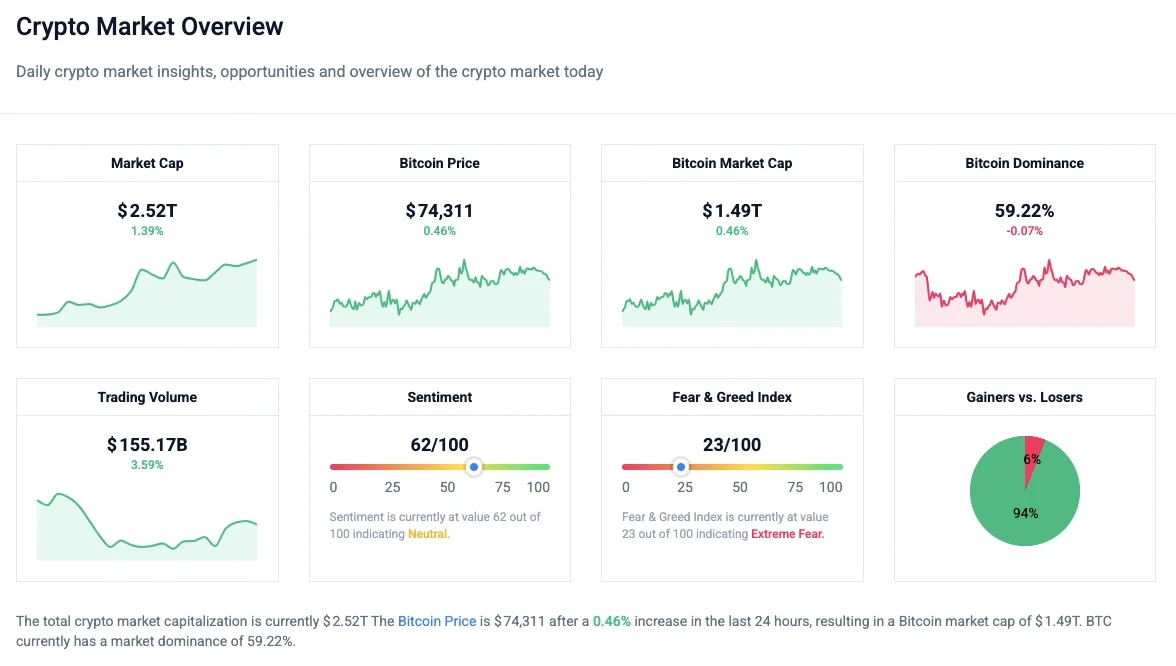
Financial analysts love writing crypto obituaries. According to 99Bitcoins, Bitcoin has been declared dead more than 477 times since its launch. Yet here we are in 2026, with the crypto market sitting well above $2.52 trillion in total market capitalization. So what's actually going on? Is crypto dead, or is it just misunderstood?
In this article, we cut through the noise and look at the real data, expert opinions, and market trends shaping crypto's future right now.
Key takeaways
Crypto is not dead. The total market cap has recovered past $3 trillion as of 2024 and continues to hold strong.
Bitcoin has been declared dead 470 - 477 times. It has recovered and hit new highs each time.
Stablecoins settled $27.6 trillion in 2024, surpassing Visa and Mastercard combined.
Institutional players like BlackRock, Fidelity, and JPMorgan are now deeply embedded in crypto.
The "crypto is dead" narrative almost always spikes during price downturns, not when evaluating actual on-chain activity.
Real metrics like developer activity, stablecoin volume, and ETF inflows tell a very different story.
Is crypto dead?
No. Crypto is not dead.
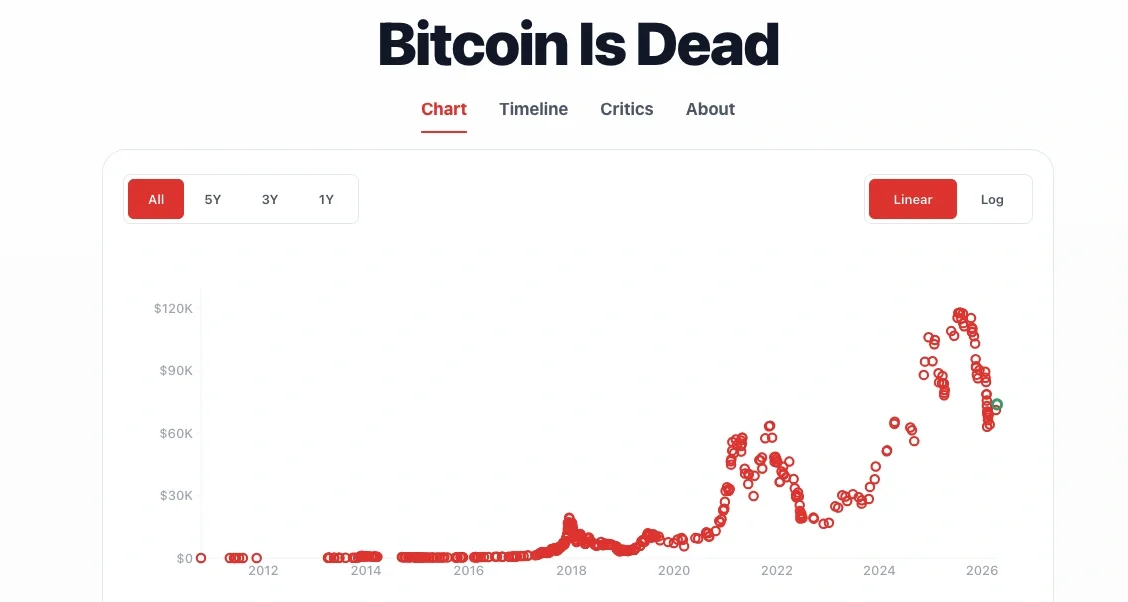
Despite repeated predictions of its collapse, the cryptocurrency market has shown remarkable resilience across every major downturn. Bitcoin crossed $100,000 in late 2024. Spot Bitcoin ETFs launched in the U.S. and attracted billions in inflows within weeks. Stablecoin settlement volume in 2024 hit $27.6 trillion, a figure that dwarfs both Visa and Mastercard's annual transaction volumes, according to CEX.io.
The people who operate inside the industry rarely look at price to assess its health. They look at usage, developer activity, institutional flows, and infrastructure signals.
When you look at those metrics, the story is very different from the headlines.
What is a crypto winter?
A crypto winter is a prolonged period of declining or stagnant prices across the cryptocurrency market. It's typically marked by bearish sentiment, reduced trading volume, and a general pullback from retail investors.
The most notable crypto winter in recent memory ran through most of 2022 and into 2023. During that time, Bitcoin fell from a peak of around $69,000 to under $17,000. The total crypto market cap dropped from $2.9 trillion to under $1 trillion.
But crypto winters are not new, and not permanent. Bitcoin has gone through multiple severe drawdowns in its history and recovered each time to set new highs. The 2022 winter was painful, but it also cleared out weak projects and led to the more regulated, more institutionalized market we see today.
Read next: How to spot opportunities during a bear market
Are cryptocurrencies dead? What's the current state of the crypto market
The crypto market peaked at a $2.9 trillion market cap in November 2021, then collapsed sharply through 2022. The trigger was the $50 billion collapse of the Terra blockchain, whose UST stablecoin and LUNA token imploded within days. That collapse sent shockwaves through the entire sector, taking down major platforms such as Celsius, Voyager, and eventually FTX.
FTX's bankruptcy was particularly damaging. Once backed by institutional investors and praised widely in the media, its collapse exposed systemic fraud and a near-total absence of financial oversight. Confidence in centralized crypto platforms hit rock bottom.
Then things shifted.
By late 2023, the market began recovering. In January 2024, the U.S. Securities and Exchange Commission approved spot Bitcoin ETFs, a landmark decision that opened Bitcoin to mainstream investors through traditional brokerage accounts. Bitcoin crossed $100,000 in December 2024. Altcoins followed. Total market cap climbed back above $3 trillion.
As of 2026, the market is more mature, more regulated, and more institutionally integrated than at any point in its history. That's not what a dying market looks like.
Why do people think crypto is dead?
Even with Bitcoin above six figures, some analysts remain convinced crypto has no future. Here's why that view keeps coming back.
1. Price volatility and speculative nature
Crypto markets move fast. Bitcoin can drop 20% in a week and recover within a month. For anyone looking at short-term price charts, that kind of volatility feels unsustainable.
A lot of the "crypto is dead" sentiment comes from investors who bought near a peak and are reacting to losses rather than evaluating the underlying technology.
Price fixation is one of the biggest reasons people misjudge the state of crypto.
2. Use it like cash to regulatory and tax friction:
Taxes and reporting definitely killed a lot of the “use it like cash” vibe, especially when every small spend becomes a taxable event. People from Reddit and X (Twitter) are calling it out. You cannot use simple as currency. You have to pay taxes on it, as every country is moving towards regulating crypto as property or a digital asset like stocks and ETFs.

3. Crisis of confidence
High-profile failures have done real damage to crypto's reputation. The collapse of FTX in particular hit hard. What appeared to be a well-run, institutionally backed exchange turned out to be built on fraud. Stories like that don't just hurt investors; they push potential adopters away entirely.
That said, the aftermath of FTX also led to stronger regulatory frameworks, more scrutiny of centralized platforms, and a greater push toward self-custody and decentralized alternatives.
4. Lack of real-world use cases
Critics often point out that blockchain technology and crypto assets still lack meaningful everyday utility. NFTs had a moment and faded. DeFi protocols remain largely confined to crypto-native users. The promise of disrupting finance, supply chains, and healthcare is still mostly theoretical for the average person.
This is a fair criticism. But the same was true of the internet in 1997. Real adoption takes longer than the hype cycles suggest.
5. Rise of CBDCs
Central Bank Digital Currencies represent a genuine challenge. Dozens of countries are either piloting or actively developing their own digital currencies backed by government authority. Critics argue CBDCs could offer the digital payment benefits of crypto without the volatility or regulatory risk, potentially making decentralized currencies less relevant.
Whether that plays out is still unclear. But it's a legitimate concern, not just noise.
What are the key metrics of a positive future for cryptocurrency?
The case for crypto's long-term viability doesn't rest on price charts. It rests on a handful of concrete indicators that have been moving in a consistently positive direction.
1. The rise of crypto projects and use cases
Blockchain technology is expanding into real industries at a pace that often goes unnoticed in mainstream coverage.
Some examples of where crypto projects are gaining genuine traction:
-
Decentralized finance (DeFi): Platforms offering lending, borrowing, and yield generation without a bank as an intermediary. DeFi protocols have processed hundreds of billions in transactions.
-
Supply chain verification: Companies using blockchain to track the origin and movement of goods, reducing fraud and improving transparency.
-
Cross-border payments: Stablecoins are enabling instant international transfers at a fraction of what traditional wire transfers cost.
-
Healthcare data management: Blockchain-based systems for storing and sharing medical records securely across providers.
-
Tokenized real-world assets (RWAs): Traditional financial assets like U.S. Treasury bonds and real estate are being tokenized and traded on-chain, with major institutions like BlackRock leading the charge.
These aren't experiments anymore. They're live, revenue-generating applications.
Read next: What is DeFi? A beginner's guide
Increasing market capitalization of Bitcoin
Bitcoin's market capitalization has reached new all-time highs, reflecting growing investor confidence from both retail and institutional participants. A rising market cap signals that more capital is entering the ecosystem, not leaving it.
The rising price of Bitcoin
Price is not the only signal, but it's not irrelevant either. Bitcoin delivered a 74% compound annual growth rate over the past decade, according to Coinme COO Sung Choi. No traditional asset class comes close to that kind of long-term return. That track record keeps attracting new investors even as critics write the obituaries.
The capital being raised by crypto companies
Crypto companies continue to raise significant capital through venture funding, token offerings, and institutional partnerships. The influx of capital into blockchain infrastructure, security, and compliance tools signals long-term conviction from serious investors, not just retail speculation.
Why the "crypto is dead" narrative refuses to die?
The headline resurfaces every time prices fall. And prices fall often in crypto.
Part of it is media incentives. A "crypto is dead" headline drives far more clicks than a story about stablecoin settlement volume hitting a record or a new L2 throughput milestone. Fear travels faster than nuance.
Part of it is also psychological. Most people experience crypto through price charts, not through the systems running underneath. They see red candles, not the thousands of developers shipping upgrades or the pension funds quietly increasing their Bitcoin exposure. When perception is built entirely on price, every significant drawdown looks like a death.
As FPBlock CEO Wesley Crook put it, the narrative almost always reflects price fixation. People react to falling tokens rather than noticing the simultaneous expansion of enterprise integrations, payments infrastructure, and blockchain adoption across industries.
The other factor is that some of the criticism is valid. There have been real frauds, real failures, and real harm done to investors. Conflating those specific failures with the collapse of the entire ecosystem is intellectually lazy, but it's a very easy story to tell.
What are the opportunities and challenges for crypto?
Growing institutional adoption
The biggest shift in crypto over the past few years has been the entry of major financial institutions.
-
BlackRock now runs the world's largest Bitcoin ETF.
-
JPMorgan processes about $1 billion per day through its blockchain network.
-
PayPal launched its own stablecoin and uses it to pay enterprise vendors.
Larry Fink once called Bitcoin an "index of money laundering." He now publicly advocates for it as a legitimate asset class.
When the institutions that once dismissed crypto begin building on it, the narrative changes fast. This level of institutional participation improves market liquidity, brings regulatory credibility, and makes crypto harder to ignore for the average investor.
Potential government adoption
El Salvador recognized Bitcoin as legal tender in 2021, a first for any country. The European Union introduced the Markets in Crypto-Assets (MiCA) regulation to bring structure and oversight to the sector. In the U.S., discussions around establishing a strategic Bitcoin reserve have moved from fringe policy proposals to serious legislative conversations.
Not every government is moving in the same direction. China maintains a strict ban on most crypto activity. But the overall regulatory trend, at least in major Western economies, is toward accommodation rather than prohibition.
Technological innovation
Blockchain infrastructure has improved significantly.
-
Layer 2 solutions like Bitcoin's Lightning Network make transactions faster and cheaper.
-
Protocols focused on interoperability are making it easier to move assets across different blockchains.
-
Zero-knowledge proofs are enabling privacy-preserving applications that were impossible just a few years ago.
-
Ethereum added over 16,000 developers in 2025, according to the Ethereum Foundation.
-
Solana's builder base grew more than 60% in two years.
These aren't the numbers of a technology in decline.
Read next: What is blockchain technology?
UI/UX improvements
One of the most persistent barriers to crypto adoption has been how hard it is to actually use. Seed phrases, gas fees, wallet addresses, and bridge transactions are genuinely confusing for people coming from traditional finance.
That's changing. Smart wallets on Ethereum simplify account creation and remove the need for seed phrases. Apps are increasingly abstracting away the complexity of the underlying blockchain. The closer crypto gets to the experience of using a regular banking app, the wider the potential user base becomes.
What do the experts think?
The people closest to the infrastructure don't think crypto is dead. And not because they're optimistic by default.
-
Sung Choi, COO of Coinme, points to economic reality over sentiment. Stablecoins settled $27.6 trillion in 2024. That surpasses Visa and Mastercard combined. Year-over-year stablecoin velocity is rising. Institutions, including pensions, endowments, and sovereign wealth funds, are adding crypto allocations. "None of the conditions for crypto's death exist," he said.
-
Hedy Wang, CEO of Block Street, says she watches whether developers are still building. "I check if devs are still shipping and if on-chain activity keeps rising," she said. As long as institutions continue putting real-world assets on-chain, she doesn't see a credible path to the industry flatlining.
-
Markus Levin, co-founder of XYO Network, takes a data-driven view. Ethereum added 16,000+ developers in 2025. Solana's builder base grew over 60% in two years. DePIN revenues expanded 100x. "These signals show an ecosystem compounding underneath sentiment cycles," he said.
-
99Bitcoins general manager Tayler McCraken perhaps put it most plainly: "When the hype dies, the utility lives."
-
Dr. David Utzke, CEO of MyKey Technologies and a former member of the IRS Cyber Crimes Unit, frames it historically. In the 1990s, people declared gaming dead. In the early 2000s, critics said digital cash had failed. Both were quietly evolving in the background. "Crypto doesn't die," he said. "It metamorphoses."
Conclusion: So, is crypto really dead?
No. The data doesn't support it, and neither do the people building inside the industry.
What keeps dying are the specific narratives, hype cycles, and overvalued projects that attach themselves to crypto during bull runs. When those fade, people mistake the end of speculation for the end of the technology. They're not the same thing.
The underlying infrastructure is stronger than it's ever been. Stablecoins move trillions. Developers keep building. Institutions that once dismissed crypto now rely on it. Bitcoin has a decade-long track record that no other asset class can match.
If anything is on its way out, it's the idea that crypto's future can be read from a price chart. The ecosystem is becoming infrastructure. And infrastructure doesn't trend. It just quietly runs everything.
Manage your crypto journey with Blockstats
Whether you're tracking a multi-chain portfolio or trying to make sense of your DeFi activity, Blockstats gives you a clear view of everything in one place.
Blockstats tracks your crypto performance across wallets and exchanges in real time. It handles DeFi transactions, staking rewards, and LP positions automatically. And when tax season comes around, it generates compliant reports for your CPA or your preferred tax software.
If you want to stop guessing and start tracking properly, start using Blockstats for free today.
Frequently asked questions
Is crypto fully dead?
No. The total crypto market cap remains above $2.52 trillion, Bitcoin has set new all-time highs, and institutional adoption continues to grow. The "crypto is dead" narrative tracks price, not technology or fundamentals.
What defines a crypto winter?
A crypto winter is a prolonged period of falling or stagnant prices across the crypto market, marked by reduced trading volume and weak investor sentiment. The 2022 downturn is the most recent example.
Is crypto still a good investment?
Crypto remains high-risk and highly volatile. It has delivered strong long-term returns historically, but past performance is not a guarantee. Always assess your own risk tolerance before investing.
What are the risks for crypto in the future?
Key risks include regulatory crackdowns, technological vulnerabilities, market manipulation, and the potential rise of CBDCs, reducing demand for decentralized alternatives. Fraud and platform failures remain ongoing concerns.
Is cryptocurrency dead today?
No. As of 2026, stablecoins are settling trillions in transactions, Bitcoin ETFs are live in the U.S., and major institutions like BlackRock and JPMorgan are actively building on crypto infrastructure.
Is crypto a dying market?
No. Developer activity is growing, on-chain transaction volume is rising, and institutional capital continues to flow in. The market is maturing, not dying.
Is crypto likely to recover?
Yes, the cryptocurrency market has a strong history of recovering from previous crashes, such as 2011, 2013, 2017, and 2021. Crypto has already recovered from its 2022 lows. Bitcoin crossed $100,000 in late 2024. In 2026, BTC is trading at a $70,000 to $75,000 price range. Experts believe the market is maturing due to institutional support from spot Bitcoin ETFs and growing adoption